
AI Product Features.
AI search, copilots and smart features built into your own product — accurate, fast and affordable to run at scale.
Book a call
Service details
- Service:
- AI Integration & Feature Development
- Focus:
- Copilots, AI Search, RAG, Summarisation
- Industries:
- SaaS / Fintech / Marketplaces
- Role:
- Product Design, LLM Engineering & Evals
About the service
AI features your users actually rely on, not a chat box bolted onto the sidebar.
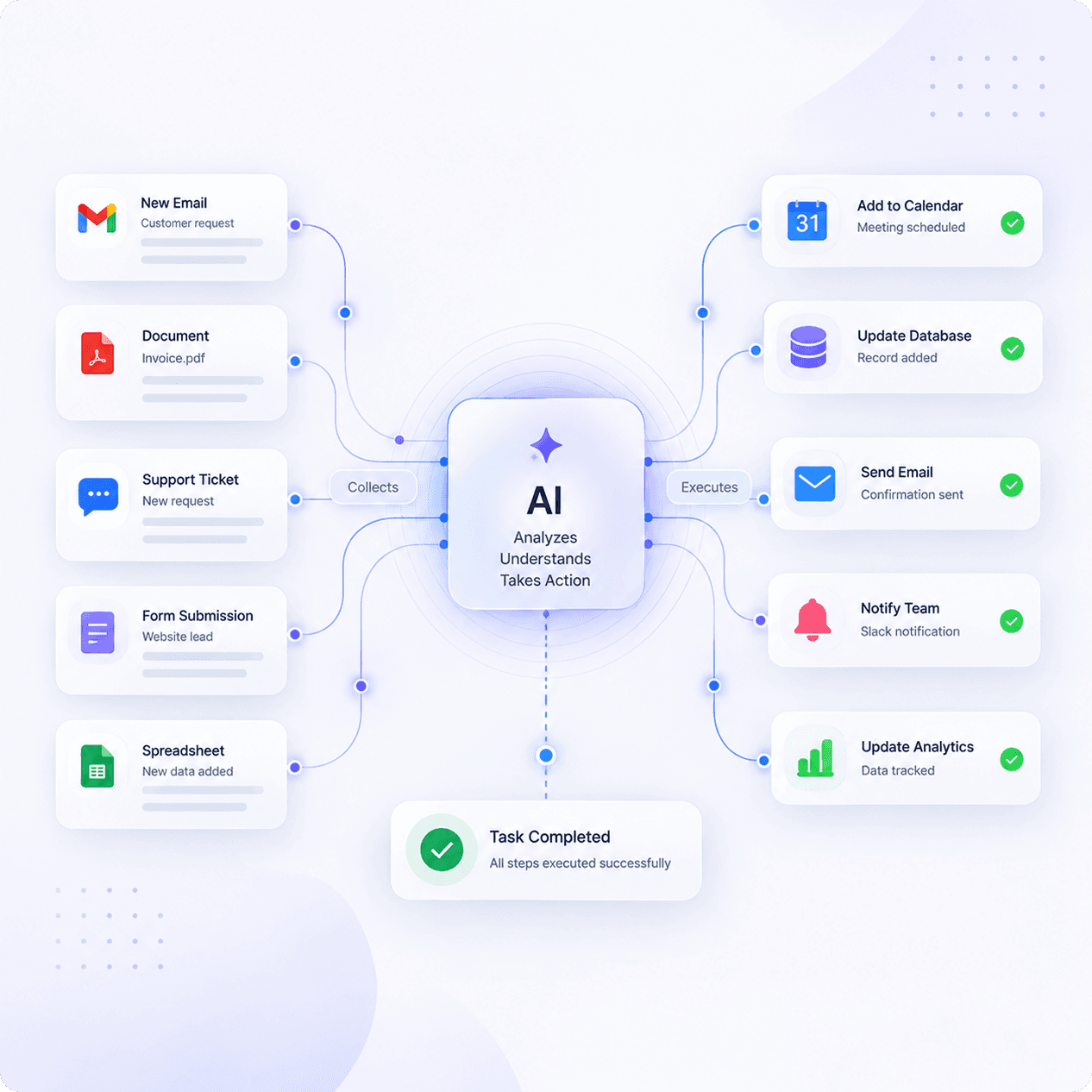
The AI features that stick solve a specific job inside the product: finding the right record by describing it, summarising a long thread, drafting from a template, pulling fields out of an uploaded document. We start from that job and the data that answers it, not from the model.
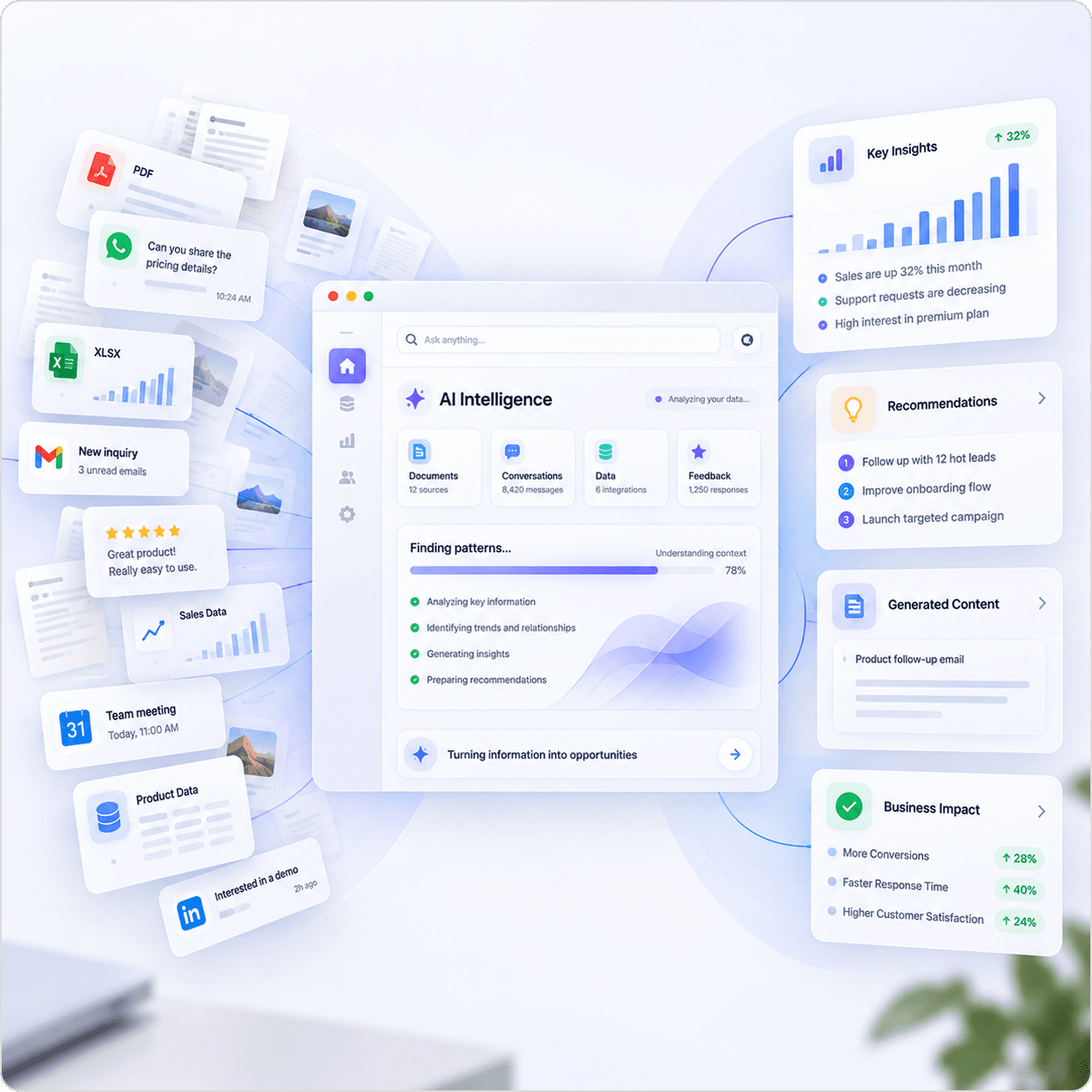
Because design and engineering happen together, the feature is built as part of the product — loading states, citations back to source, and a clear way to correct the output — so people trust it enough to use it again the next day.
Our approach
From the first use case to AI features in production
We pick the use case with the clearest user value and the data to support it, then build a test set from real examples before writing the feature. That set is how accuracy is measured — and how every later prompt or model change is checked before it ships.
The feature is then designed and built into your stack: retrieval over your data, the model calls, the interface and the guardrails. Cost per request, latency and quality are tracked from launch, with smaller models routed in wherever they perform just as well.
The outcome
AI that makes the product more useful — and stays affordable as usage grows.
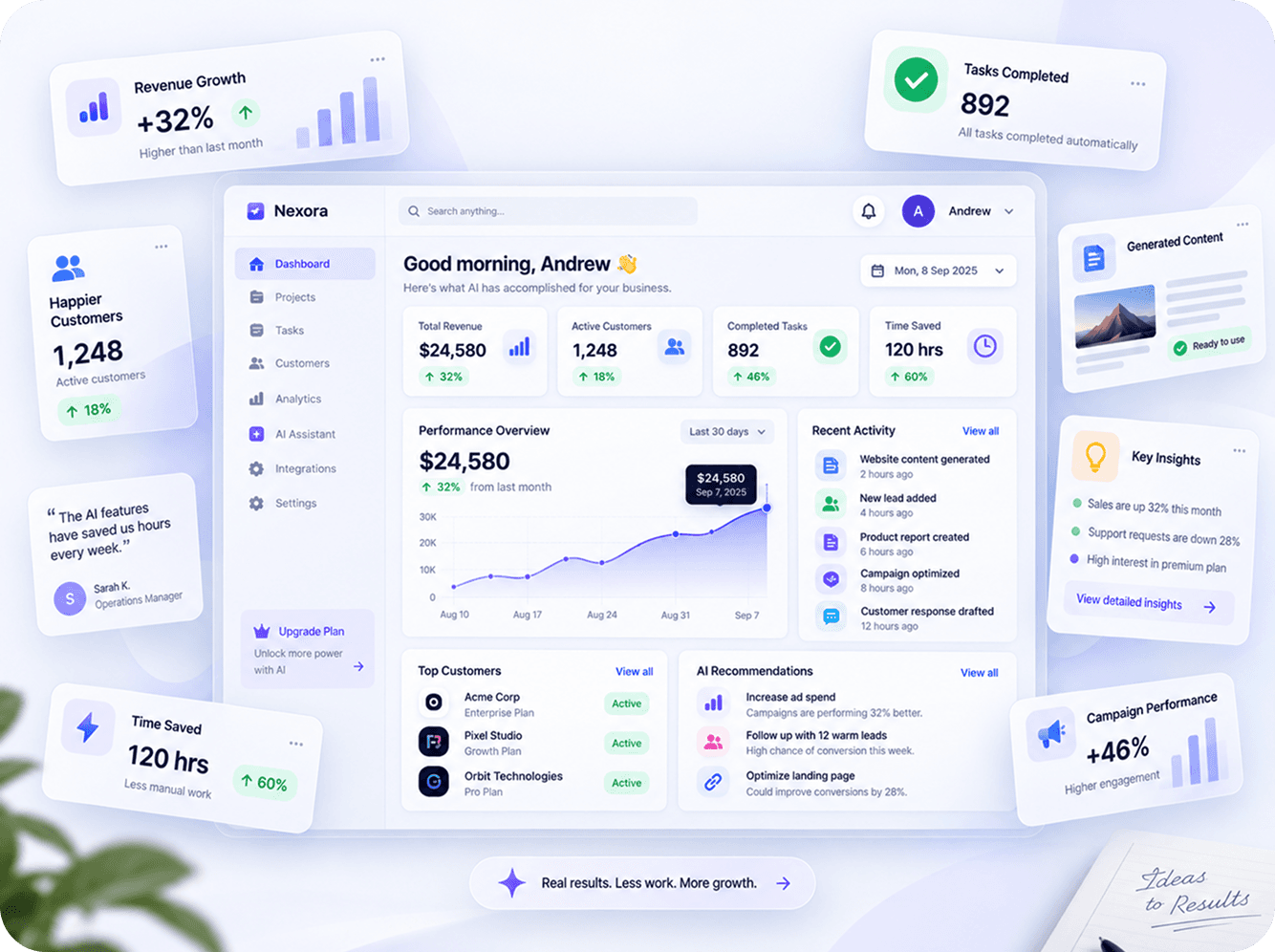
Users find, summarise and create faster inside the product they already use, and the feature earns repeat use because its answers are grounded in their own data rather than generic output.
Your team gets the evaluation suite, prompts, retrieval pipeline and cost dashboards along with the code, so the feature can be improved, re-tested and moved to newer models without starting over.
What's included
What a ai product features engagement covers
- AI feature discovery and product scoping
- In-app copilots and AI assistants
- AI search and RAG over your own data
- Summarisation, extraction and generation features
- UX design for AI states, sources and errors
- Evaluation, cost monitoring and model routing
FAQ
AI Product Features questions, answered
Still unsure about something? Ask us directly, we answer every message ourselves.
What AI features can we add to our product?
The most common are natural-language search across your data, in-app copilots that answer questions or take actions, summarisation of long records or threads, drafting and content generation, document and data extraction, and smart tagging or categorisation. The right one depends on where your users currently spend the most time.
What is RAG and do we need it?
Retrieval-augmented generation (RAG) means the model looks up relevant content from your own data before answering, rather than relying only on what it learned in training. You need it whenever answers must reflect your product's data, documents or customers — it is what makes the output accurate, current and citable.
How do you keep AI features accurate?
Every feature is tested against a set of real examples before launch and again after every prompt or model change. Answers are grounded in retrieved data with citations where it matters, and the interface makes it easy for users to check sources and correct the output.
How much does it cost to run AI features?
It depends on usage and model choice, which is why cost per request is tracked from day one. Caching, smaller models for simple steps and larger ones only where they measurably help keep running costs predictable as usage grows.
Is our customers' data safe?
Data stays in systems you control, model providers are chosen for the retention terms your policy requires, and personal or sensitive fields can be redacted before any request is made. Your product's access controls carry through to the AI feature, so users only see answers drawn from data they are allowed to see.